By Riaan Vorster
Some routes are born wild, and no amount of popularity, publicity or skill can ever tame them. They care nothing for dignity and laugh in the face of subjugation. In July 1922, Ken Cameron and party opened such a route. A century of mountaineering activity on Table Mountain has done nothing to diminish its wildness.
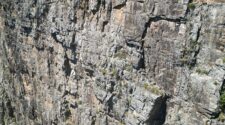
Rivalling Corridor Buttress as the most prominent buttress on the Twelve Apostles, Slangolie Buttress catches the eye from every angle. But while most marvel at its size, the mountaineer gazes in awe at its frontal ridge. No ridgeline on Table Mountain sweeps skyward with quite the same stateliness. It exemplifies the kind of feature early cragsmen fantasised about (and to a degree still do). No wonder it was climbed as early as 1897. Opened at E-grade, it predates even the majority of B- and C-grade routes.
For the next 25 years, pioneers did not bother with Slangolie Buttress – inconceivable given its size, accessibility and the scope for new routes. A lack of inspiration caused by an absence of striking features accounted for the neglect. Aside from the frontal ridge, the buttress offered only undulations destitute of continuity, none of which appealed. It’s as if all the features that would normally exist on a buttress of such size were used up in the formation of the flawless frontal ridge.
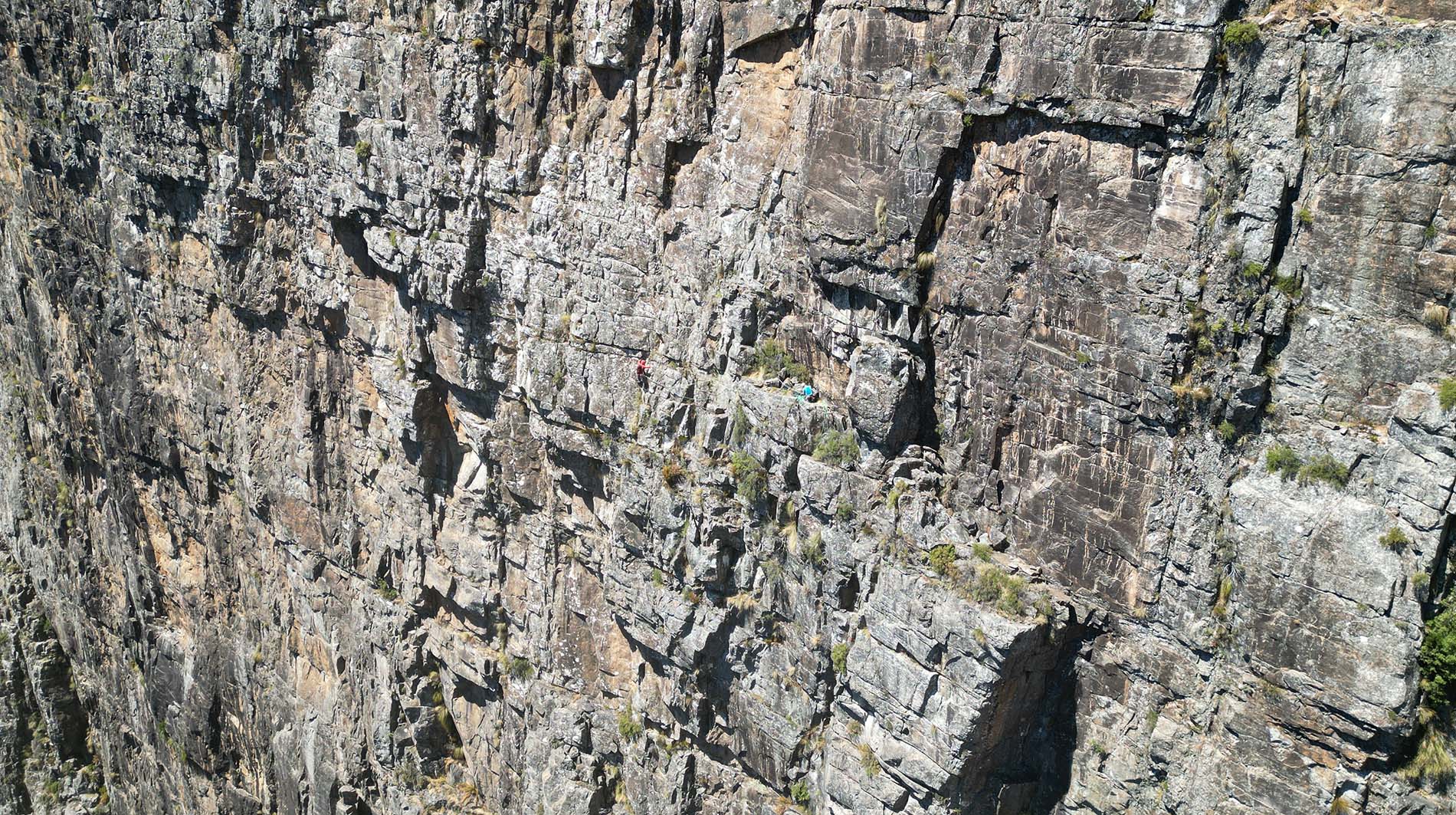
It eventually fell to Ken Cameron to break this inertia through the opening of Slangolie Corner in January 1922. It led up the north face of the buttress – a commanding sweep of mountain – and managed to find a half-decent feature. Graded D+, it falls outside the scope of this book. Six months later, Cameron opened his second route on the buttress, also up the north face. It failed to find any feature at all and followed nothing but the line of least resistance. Accordingly, he named it Slangolie Face.
Read the full article