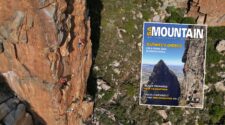
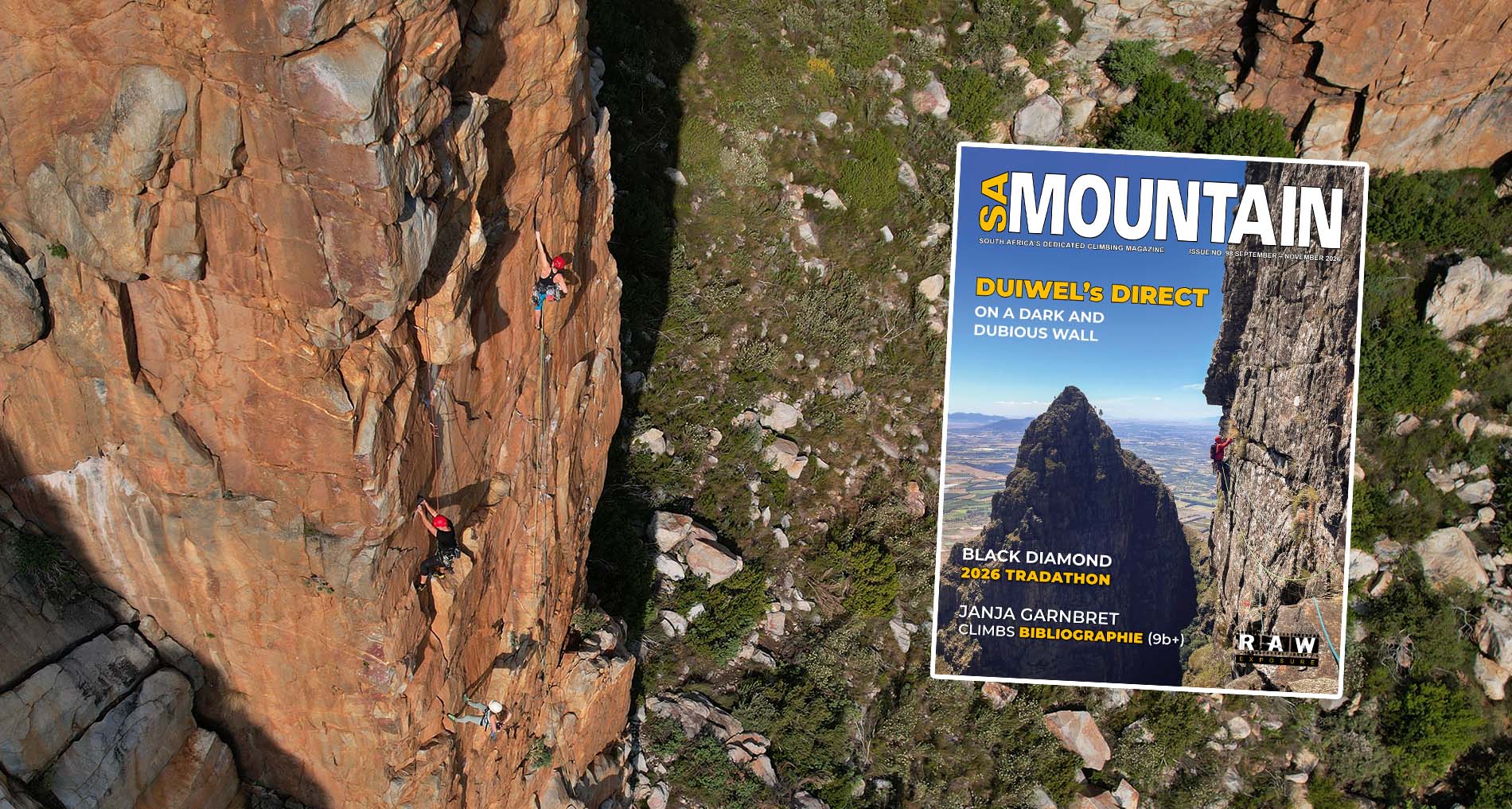
Read the editorial and check out the contents of the latest issue.
With up-to-date news coverage, training articles, gear reviews, celebrity profiles, technical tips covering a wide variety of subjects, event reports, big glossy pics and enthralling articles.
[su_heading]SA Mountain Editorial – Issue 78[/su_heading]
Access, access, access
Access! It has almost become a profanity these days amongst some climbers. How indignant some of us get when we are told that we are not allowed to climb in a certain area, or have to pay a fee, almost as though it is our God-given right to able to climb and cross any piece of land, and how dare the owner exercise their right to prohibit us from doing so?
Well, however you look at it, climbing, as much as it is a burning passion for us, means diddly-squat to non-climber landowners, and they have every right to close their land to climbing, or limit access, or to levy an entrance fee. It is actually up to us, as climbers, to enter into negotiations with landowners and ensure smooth relations wherever possible. Sometimes it works and sometimes it doesn’t. And if it doesn’t work, then move on, and hopefully in the future renewed negotiations can change things. Access is a two-way street. It must be beneficial for the landowner as well as the climber. And climbers must learn to respect the wishes of landowners. It’s that simple. Taking an arrogant and belligerent stance, or deliberately trespassing, will definitely not add sugar to the mix and will invariably result in permanent closure.
And don’t think we are the only ones suffering. This is a worldwide problem. Climbing areas are closed for many different reasons – environmental, religious, cultural, agricultural, privacy and others, I’m sure. In fact, it has become such an issue across the globe, that many alpine clubs and mountaineering associations have formed dedicated access committees, so that they can enter into talks and negotiations with landowners to come to an agreement that will allow climbers to access the crags and mountains on their property. The best and biggest example of this is The Access Fund in the USA, which I’m sure many of you have heard of. This is a non-profit ‘rock climbing advocacy group’, and their mission is two-fold, I quote, ‘First, keeping climbing areas open and gaining access to currently closed climbing areas. Second, they promote an ethic of responsible climbing and conservation of the climbing environment.’
In South Africa, we face similar issues, but in comparison, we are not that badly affected – we have tons of good quality rock with relatively few access issues. The Mountain Club of South Africa has various access committees representing different provinces and areas, and the people in these committees are doing their best to negotiate with landowners (private and government) to maintain access arrangements and keep relations ‘friendly’.
One thing is certain – there will never be free and open access for all to everywhere, and access issues will remain with us for eons to come. It is an ongoing process, and it is up to us to make good where and how we can.
Be safe in the hills
Tony
[su_heading]Features[/su_heading]
Slanghoek Amphitheatre
New routes on Cape Town’s backyard big wall
by Sam Nightingale
Apollo lift-off
CLIMBING and exploring on apollo and luna peaks, Cederberg
by Ant Hall
Who’s your (grand) daddy?
The history of rock climbing
by Matthew Holt
South Africa in the olympic games
by Tony Lourens
[su_heading]Regulars[/su_heading]
RAW Exposure
Gear Reviews
Classifieds
Book Reviews
[su_button url=”http://www.samountain.co.za/online/78/SAMountain78.html” target=”_blank” style=”flat” background=”#2dabef” size=”5″]Read Online[/su_button]